

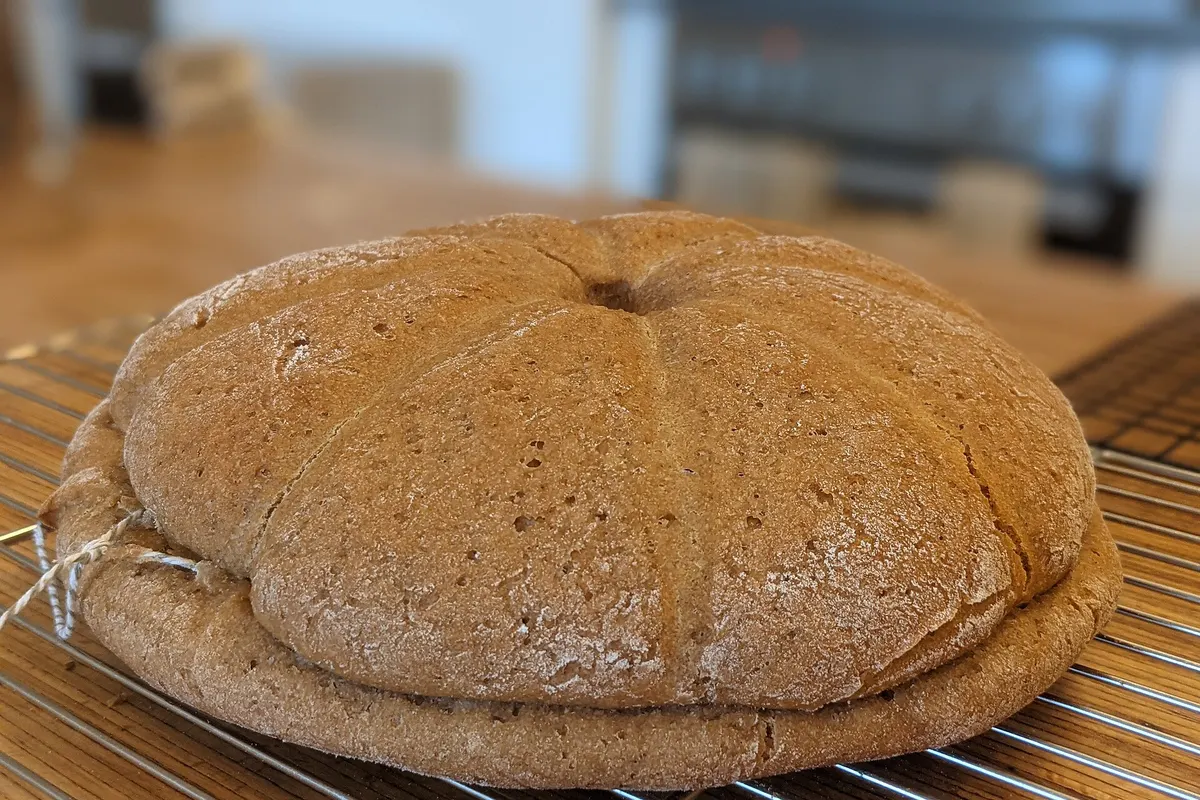
Herculaneum loaf
A round, dense loaf from ancient Rome, found charred at Herculaneum after the eruption of Vesuvius in 79 AD. Today it is recreated as a wheat flour bread with a marked crosshatch pattern on top, typical of ancient Roman cooking.
- Prep
- 30 min
- Cook
- 35 min
- Serves
- 6 servings
- Level
- Advanced
Free: your account takes 30 seconds to create, no credit card.
Ingredients
Ingredients
Spices & seasoning
Optional extras
Nutrition facts
334 kcal per serving
- Protein
- 11.6 g
- Carbohydrates
- 56.6 g
- of which sugars
- 1.3 g
- Fat
- 5.6 g
- Fiber
- 3.1 g
Ecomely’s estimate, calculated from the ingredients with the ANSES Ciqual food composition table, excluding sides and seasoning added to taste.
Instructions
0 / 6 stepsDissolve the yeast in the lukewarm water, then mix with the flour to form a rough dough.
- 10 g Fresh baker's yeast
- 350 ml Lukewarm water
- 500 g Wheat flour
Add the salt and olive oil and knead for 8 minutes until you have a soft, elastic dough.
- 10 g Fine salt
- 2 tbsp Olive oil
Cover and let rise for 1 hour 30 minutes, until doubled in size.
Shape into a round ball, place on a tray and let rise again for 30 minutes.
Score a shallow crosshatch on top with a knife, then sprinkle with sesame if you like.
- 1 tsp Sesame or aniseed
Bake at 220 °C for 30 to 35 minutes, until the crust is golden and the loaf sounds hollow when tapped.
- 220 °C
Variations and tips
Fig version. Add the chopped figs during kneading for a more fragrant crumb.
More ideas
 Spanish
 Dauphiné
 Provençal

 North African
 Indian
 Tex-Mex
 French
 Original Ecomely recipe.